

Blog > What Does It Mean to Blue Tape a New Construction Home? An Acadiana Buyer's Guide
What Does It Mean to Blue Tape a New Construction Home? An Acadiana Buyer's Guide
by
What Does It Mean to Blue Tape a New Construction Home? An Acadiana Buyer's Guide
Blue taping is the walk-through where you mark every unfinished or defective item in a new construction home with blue painter's tape so the builder fixes it before closing. In Acadiana, plan it about one to two weeks before your closing date, photograph every flagged item, and get the punch list in writing with completion dates.
| Item | Figure |
|---|---|
| When to blue tape | One to two weeks before closing |
| Independent new construction inspection | About $300–$600 |
| 11-month warranty inspection | About $250–$350 |
| Louisiana New Home Warranty Act coverage | 1 year workmanship, 2 years systems, 5 years major structural |
| Deadline to notify your builder of a defect | Registered or certified mail within one year of learning about it |
There's nothing quite like walking into your brand-new home for the first time. Fresh paint, the smell of new wood, and the knowledge that everything in it is yours. But before you sign those closing papers, one step protects that investment more than any other: the blue tape walk-through.
I'm Alyson Finch, REALTOR® with Real Broker, LLC, and I've walked many Acadiana buyers through this exact moment. Here's what blue taping means, what to look for, and how it connects to the warranty protections Louisiana law gives you after closing.
What does "blue taping" a new home actually mean?
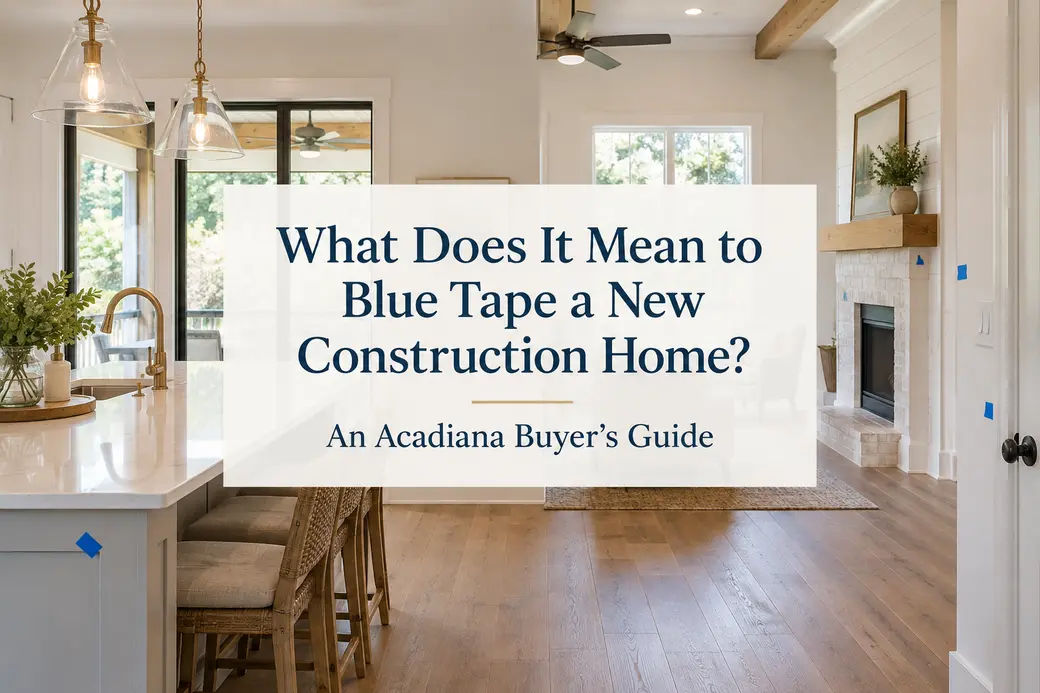
Blue taping is your walk-through of a new construction home with your builder and your agent, where you mark anything that needs attention before closing. The name comes from the blue painter's tape used to flag items such as paint drips, uneven caulking, scratched cabinetry, or a door that won't latch. Tape is used because it peels off without damaging finishes.
Everything you flag becomes the punch list, the written list of items the builder agrees to correct. Think of it as your quality control check, measured against both your expectations and the builder's own written standards.
Alyson's tip: Patience and a good eye is a must, you guys! This is your one scheduled chance to have items fixed while the builder's crews are still on site and you still have leverage.
When does the blue tape walk-through happen?
Blue taping usually happens one to two weeks before closing, once the home is substantially complete but while crews can still make repairs. It is one step in a longer sequence.
| Stage | Timing | What happens |
|---|---|---|
| Pre-pour and pre-drywall inspection | During construction | Optional independent inspections of the slab prep and the framing, plumbing, and wiring before drywall covers them |
| Blue tape walk-through | 1–2 weeks before closing | You and your agent flag cosmetic and functional items; the builder creates the punch list |
| Builder repairs | Between walk-through and closing | Crews complete the punch list items |
| Final walk-through | 24–48 hours before closing | You verify every punch list item was actually completed, using your photos |
| Closing | Closing day | Your builder must give you written notice of the Louisiana New Home Warranty Act requirements |
| 11-month inspection | About 11 months after closing | An inspector finds warranty items before the one-year workmanship coverage ends |
What should I look for during a blue tape walk-through?
It's easy to get caught up in the excitement, so work room by room with a list. Here's where to focus.
Walls, trim, and paint
- Uneven paint, drips, missed spots, roller marks, and nail pops
- Chips, caulk gaps, and rough edges on trim and molding
- Drywall seams and corner beads, especially where light hits at an angle
Doors and windows
- Open and close every door, including closets, and check that each one latches
- Test every window for smooth operation and a proper seal
- Check weatherstripping and screens; in our wind-driven rain, exterior door seals matter
Electrical and lighting
- Flip every switch and test every outlet with a phone charger
- Check exterior lighting and garage outlets
- Confirm smoke and carbon monoxide detectors are installed and working
- Run ceiling fans on every speed and check for wobble
Plumbing fixtures
- Run every faucet and shower to test water pressure and drainage
- Look under each sink for leaks
- Flush all toilets and confirm hot water at each fixture
Cabinets, countertops, and floors
- Inspect countertops for chips, scratches, and seams
- Open every cabinet and drawer; they should align and close evenly
- Walk each room barefoot to feel for uneven flooring or squeaks, and look for scuffs and gaps at transitions
HVAC, attic, and mechanicals
- Run the air conditioning and check that every room gets airflow
- Run the heat for a few minutes too, even in August
- Look into the attic for even insulation coverage and properly sealed ductwork
- Find the water heater, breaker panel, and main water shutoff so you know where they are on day one
Exterior, drainage, and landscaping
- Confirm gutters are attached and downspouts carry water away from the foundation
- Look for grading that slopes toward the house or low spots where water will stand; drainage is the issue I see cause the most regret in our area
- Check driveways, walkways, and the slab edge for cracks or uneven sections
- Check sod coverage, irrigation heads, and fence alignment if those are included
Pro tip: Photograph every item you tape, and number the tape with a marker so your photos match the builder's punch list. At the final walk-through, you'll have proof of what was promised.
What does a blue tape walk-through not cover?
Blue taping catches what you can see. It doesn't catch what's behind the drywall, under the slab, or inside a system that hasn't run through a full season yet. That's why many Acadiana buyers add an independent inspection to a new build.
- A parish or city inspector is not your inspector. Municipal inspections confirm that work meets minimum code, not that it meets your contract or the builder's standards.
- Hidden work needs its own timing. A pre-drywall inspection is the only chance to see framing, plumbing, and wiring before they're covered.
- Systems need testing, not just looking. A licensed inspector will test the HVAC, check duct connections, and measure things you can't eyeball.
- Cost. An inspection generally runs about $400 to $600 depending on square footage
How does the Louisiana New Home Warranty Act protect me after closing?
Louisiana gives every buyer of a new home automatic warranty protection under the New Home Warranty Act (La. R.S. 9:3141 and following). The coverage periods run from the warranty commencement date, and they transfer to later owners for whatever time is left.
| Period | What's covered |
|---|---|
| 1 year | Defects in materials and workmanship, including the cosmetic items you flag with blue tape |
| 2 years | Plumbing, electrical, heating, cooling, and ventilating systems, excluding appliances, fixtures, and equipment |
| 5 years | Major structural defects |
Three rules decide whether that protection actually helps you:
- Notice must be in writing. Before you repair anything yourself or file suit, you must notify the builder by registered or certified mail within one year of learning about the defect, and give the builder a reasonable chance to fix it.
- The clock is strict. Any action to enforce the warranty is subject to a peremptive period of 30 days after the applicable warranty period ends. Courts apply these deadlines literally.
- Your builder owes you notice too. The law requires the builder to give you written notice of the Act's requirements at closing. Keep that document with your warranty paperwork.
This is also the reason the 11-month inspection matters. Once that first year passes, cosmetic and workmanship items are no longer covered.
This is general information, not legal advice. If you think you have a warranty claim, talk with a Louisiana construction attorney early, because the Act's technical requirements are unforgiving.
What paperwork should I collect before closing on a new build in Acadiana?
| Document | Why it matters in Louisiana |
|---|---|
| Signed punch list with completion dates | Your record of what the builder agreed to fix and by when |
| Builder warranty manual and construction standards | Defines the tolerances the builder will measure your complaints against |
| New Home Warranty Act notice | The builder is required to provide it at closing |
| Termite treatment certificate and contract | Louisiana requires new construction to be treated by a licensed operator, and the treatment company's warranty runs from the treatment date. Note your renewal date, because coverage lapses if you don't renew. |
| Elevation certificate, if the home is in a flood zone | Documents the finished floor height and can help with flood insurance pricing |
| FORTIFIED roof certificate, if applicable | Starting January 1, 2027, Louisiana insurers must apply set discounts to the hurricane portion of premiums for FORTIFIED homes |
| Appliance and system manuals with serial numbers | Manufacturer warranties are separate from the builder's warranty and often register online |
| Builder's contractor license number | Verify it through the Louisiana State Licensing Board for Contractors search |
| Survey, subdivision restrictions, and HOA documents | Sets fence, shed, and parking rules before you plan improvements |
What should I bring to the walk-through?
- Blue painter's tape plus a marker to number the tape
- Your phone for photos and notes, and a charger to test outlets
- A flashlight for attics, cabinets, and dark corners
- Your purchase agreement and the builder's written standards list
- Your REALTOR®, because a second set of experienced eyes catches what excitement hides
What mistakes do new construction buyers make?
- Treating the walk-through as a tour instead of an inspection, and rushing through in 30 minutes
- Flagging items verbally instead of putting them on a written, signed punch list
- Closing on a promise that repairs will happen "next week" with nothing in writing
- Skipping the final walk-through, or skipping it without the photos from blue tape day
- Assuming the parish inspection or the certificate of occupancy means the home is finished to your contract
- Letting the first year pass without an 11-month inspection, then discovering workmanship issues after the warranty ends
- Forgetting to renew the termite contract, which voids the coverage entirely
What should I handle in the first year after closing?
- File your homestead exemption. It doesn't transfer and it isn't automatic. See my 2026 Louisiana property tax guide for what to bring to the assessor.
- Expect your tax bill to change. During construction, only the land may have been assessed. Once the completed home is on the roll, the bill rises, which can create an escrow shortage. Ask your lender how your escrow was set.
- Keep a running warranty list. Note issues as they appear with dates, and send written notice to the builder rather than only texting a superintendent.
- Schedule the 11-month inspection before the one-year workmanship warranty expires.
- Renew the termite contract on its anniversary date.
Alyson's take: blue taping is about finishing strong
Blue taping isn't about finding flaws or being difficult with your builder. It's about finishing strong. A good builder wants the punch list, because it's easier to fix a scratched countertop before you move furniture in than after.
If you're building or buying new in Lafayette, Youngsville, Broussard, or Breaux Bridge, I'd love to walk the process with you, walk-through included. Start your home search and your story at LivingInThe337.com.
Frequently asked questions
How long does a blue tape walk-through take?
Plan on two to three hours for a typical single-family home. Rushing is the most common mistake. Schedule it in daylight, bring your agent, and go room by room instead of doing a lap of the house.
Can I bring my own inspector to a new construction home in Louisiana?
Yes, and I actually suggest it. A licensed inspector can test systems and check areas a walk-through won't catch. An inspection generally costs about $400 to $600. Ask your builder about scheduling and site access rules.
What if the builder doesn't finish punch list items before closing?
Get the remaining items in writing with specific completion dates before you sign, and keep your photos from the walk-through. Louisiana's New Home Warranty Act covers defects in materials and workmanship for one year after the warranty commencement date, but written agreements are far easier to enforce than warranty claims.
Do new homes in Louisiana come with a warranty?
Yes. The Louisiana New Home Warranty Act provides one year of coverage for defects in materials and workmanship, two years for plumbing, electrical, heating, cooling, and ventilating systems, and five years for major structural defects. You must notify the builder in writing by registered or certified mail within one year of learning about a defect.
Sources
- Louisiana State Licensing Board for Contractors: New Home Warranty Act (La. R.S. 9:3141 et seq.)
- La. R.S. 9:3144: Warranties and exclusions
- Louisiana REALTORS®: Louisiana's New Home Warranty Act
- LSLBC: Verify a contractor's license
- Louisiana Department of Agriculture and Forestry: pest control reporting and pre-treatment rules
- Louisiana Administrative Code Title 7, Part XXV: structural pest control definitions
- Louisiana FORTIFIED discounts and Regulation 136 summary
- Inspect LA: south Louisiana home inspection pricing
- HomeGuide: new construction and 11-month inspection costs
GET MORE INFORMATION